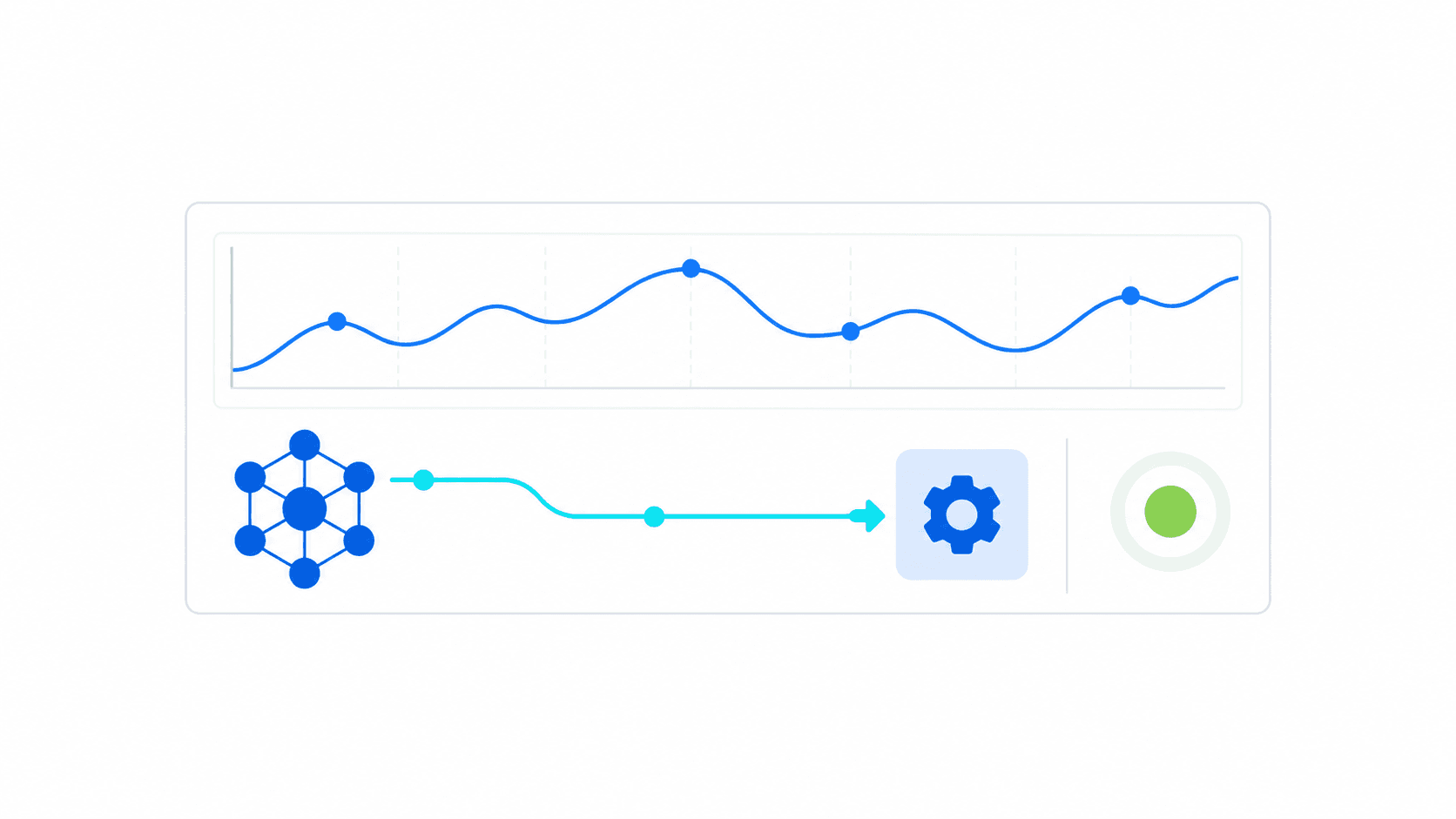
What MLOps Services include
MLOps Services help organizations build the practices and technology needed to develop, deploy, monitor, and maintain machine-learning systems. Scope may include training and inference pipelines, experiment tracking, model registries, deployment automation, monitoring, governance, and team workflows.
The objective is not to introduce tools for their own sake. A fit-for-purpose MLOps capability makes releases more reproducible, reduces manual operational effort, and helps teams understand which models are running, how they were approved, and what happens when performance changes.
Explore: MLOps Services
Build a reproducible model delivery pipeline
Map the current lifecycle from data ingestion through training, validation, approval, deployment, and rollback. Identify manual handoffs, inconsistent environments, undocumented dependencies, and gaps in test coverage. Choose automation that addresses these risks while fitting the team’s infrastructure and security model.
Track code, data references, configuration, dependencies, evaluation evidence, and model artifacts. Validate inputs and schemas, separate training and evaluation data, and require review gates suited to the model’s impact. A registry or pipeline cannot replace clear release ownership and policy.
Deploy and monitor models in context
Choose batch, streaming, online, or edge deployment based on latency, availability, privacy, and cost requirements. Include staged rollout, service health checks, access controls, capacity planning, and a tested rollback path. Ensure downstream systems handle missing, delayed, or invalid predictions safely.
Monitor latency, availability, resource use, input quality, distribution changes, prediction behavior, and business outcomes where labels become available. Drift is a signal to investigate rather than an automatic instruction to retrain. Evaluate proposed updates against representative data and the current production baseline.
Make a model release reproducible and reversible
For a demand-forecasting service, a release includes more than model weights. Track the training-data snapshot or version, feature definitions, code, dependencies, evaluation results, and deployment configuration. A model registry should associate those artifacts with an approved version. This makes it possible to explain which system produced a forecast and to reproduce the evaluation before changing production behavior.
Promotion should require representative tests across relevant product groups and time periods. Compare candidate performance with the current model and a simple baseline. Check latency, availability, schema compatibility, and the business cost of forecast errors. Use a shadow or limited rollout when appropriate, and retain a tested path back to the prior model and compatible feature pipeline.
Distinguish data drift from demonstrated quality loss
Input distributions can change without harming predictions, while quality can deteriorate before a simple drift threshold fires. Monitor data freshness, missing features, distribution changes, service health, and outcome quality where labels become available. Document the label delay and what can be inferred during that period. An alert should name its evidence and limitations rather than announce that retraining is automatically necessary.
Define who investigates alerts, approves retraining data, validates a candidate, and authorizes promotion. Test delayed feeds, incompatible feature versions, and partial deployment failures. Scheduled retraining is a workflow trigger rather than proof that a replacement model is better. Operational acceptance should include an incident runbook and rollback exercise, not just a successful training pipeline demonstration.
Test feature freshness at prediction time
A model endpoint can remain available while receiving stale inputs. Define a feature contract that includes the entity key, value type, observation time, expected freshness, and behavior when the feature is unavailable. For an online prediction, reject or explicitly handle a record that falls outside the approved freshness window. Do not silently substitute a zero if zero has a legitimate business meaning.
Replay a production-like request against the candidate pipeline and compare the feature values with those used during evaluation. Include a late-arriving event, a renamed category, and a missing upstream feed. Record which model and feature versions produced the result. A rollback exercise should restore a compatible combination, not just replace the model file. These checks make a release reproducible at the decision boundary and help distinguish data-pipeline failures from deterioration in the learned model.
Explore: ML engineering responsibilities from model to production
Establish ownership and scale sustainably
Define who owns data pipelines, model approval, monitoring, incidents, retraining decisions, and retirement. Document intended use, dependencies, known limitations, and operational procedures. Align access, retention, and audit records with organizational requirements.
Measure deployment lead time, release reliability, reproducibility, incident response, model quality, cost, and engineering toil. Start with one production model or workflow, prove the operating pattern, and expand reusable components where they reduce risk and effort. MLOps Services should leave the team able to maintain the lifecycle after implementation.