What ML Engineers own
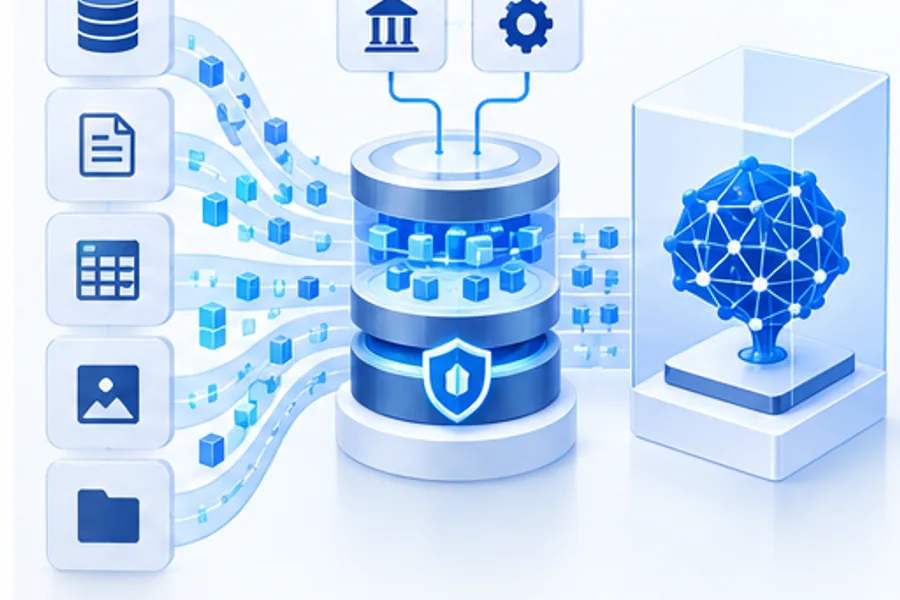
ML Engineers build the systems and processes that make machine-learning models reproducible, deployable, and supportable. Their responsibilities often include data and feature pipelines, training workflows, model packaging, serving infrastructure, integration, monitoring, and release automation.
They collaborate with data scientists, software engineers, platform teams, and business owners. The goal is to preserve model intent while meeting real service requirements such as reliability, latency, scale, privacy, and maintainability.
Create dependable data and training pipelines
Production models depend on data that is traceable, validated, and representative of the intended use. Build checks for schema changes, missing or invalid values, freshness, and unexpected distributions. Track lineage and access so teams know where data came from and how it can be used.
Make training repeatable by versioning code, data references, configuration, dependencies, and model artifacts. Separate training and evaluation data appropriately, prevent leakage, and preserve the metrics and conditions that justified a model release. Reproducibility makes debugging and comparison possible when results change.
Explore: AI-ready data foundations
Deploy models as production services
Choose batch, streaming, or online inference based on the workflow’s freshness and latency requirements. Design model interfaces with typed inputs, explicit output contracts, validation, and meaningful error behavior. Integrate with authentication, authorization, retries, timeouts, and service-level monitoring.
Plan capacity, scaling, hardware, and cost. Use staged rollout, canary or shadow evaluation where appropriate, and a rollback path. Confirm that downstream systems handle missing, delayed, or invalid predictions safely instead of treating every model response as a valid decision.
Monitor model behavior and service health
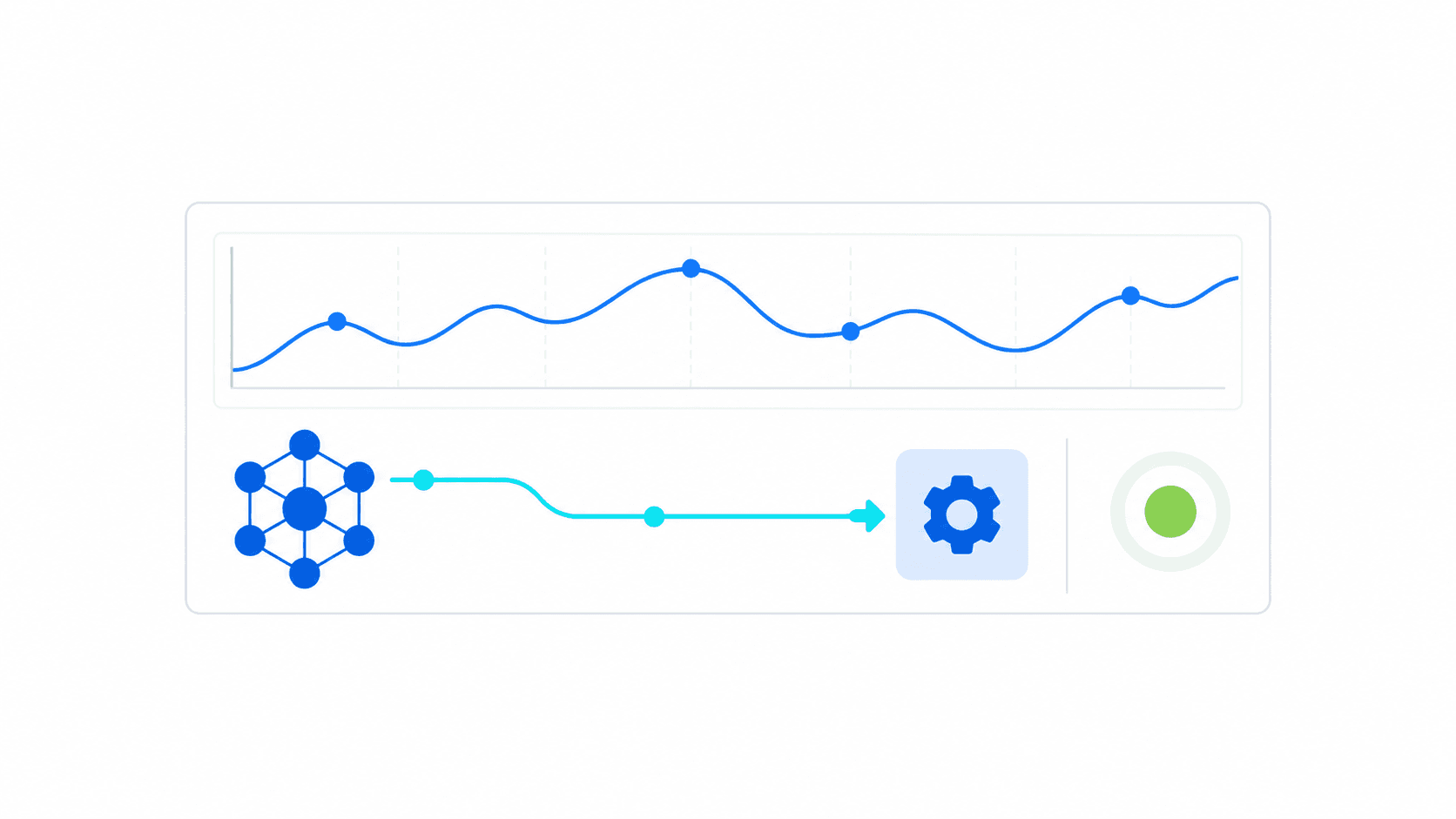
Monitor infrastructure indicators such as latency, availability, resource utilization, and failures alongside model-specific indicators such as input drift, prediction distributions, and quality where labels become available. Connect these signals to business outcomes so owners can identify when a technically healthy endpoint is no longer useful.
Define alert thresholds, investigation procedures, and accountable owners. Avoid treating drift as automatic proof of model failure or retraining as an automatic remedy; investigate the cause, assess the impact, and evaluate any proposed update before deployment.
Design a serving contract that survives ordinary data changes
For a delivery-time prediction, define required inputs, units, allowed categories, observation times, and the output meaning. Decide whether the response is an estimated duration, arrival timestamp, or range, and make downstream applications use it consistently. Keep the feature transformation version compatible with the model. A renamed category or a change from minutes to seconds should not silently become a valid prediction.
Test invalid coordinates, a missing feature, an unseen category, stale source data, and a request outside the supported service area. Specify whether each case should be rejected, use an approved fallback, or enter a review queue. Include those outcomes in integration tests with the consuming application, not only tests of the model endpoint.
Close the loop when outcome labels arrive late
Store the prediction identifier and permitted features needed to connect a later observed outcome to the correct model version. Account for records that are cancelled, corrected, or never receive a reliable label. Monitoring should show the age and completeness of available labels so a recent quality dashboard does not imply that all recent predictions have already been evaluated.
Investigate changes by data segment and release version before retraining. For a failed release, verify that the previous model still works with the active feature pipeline and serving infrastructure. Rehearse that recovery path and document who can authorize it. These lifecycle details distinguish an ML engineer’s production responsibility from training a model that performs well in an isolated notebook.
Explore: MLOps operating controls for production model services
Establish an accountable model lifecycle
Maintain an inventory of production models, their intended uses, owners, data dependencies, and current versions. Document operational assumptions and known limitations. Plan for data changes, provider or library updates, incident response, and eventual retirement so a model does not remain in service without support.
Measure the whole lifecycle: engineering effort, service reliability, quality, cost, operational toil, and value to the business. ML Engineers help organizations scale machine learning by creating repeatable delivery and governance practices that make models easier to validate, operate, and improve.
Explore: Moving an AI pilot into production