Discovery and solution design
Map the workflows, users, data, and acceptance criteria that shape a useful Computer Vision solution.
Use-case discovery · requirements · architectureAI Solutions
Use computer vision to interpret images and video for inspection, detection, safety, and operational visibility.
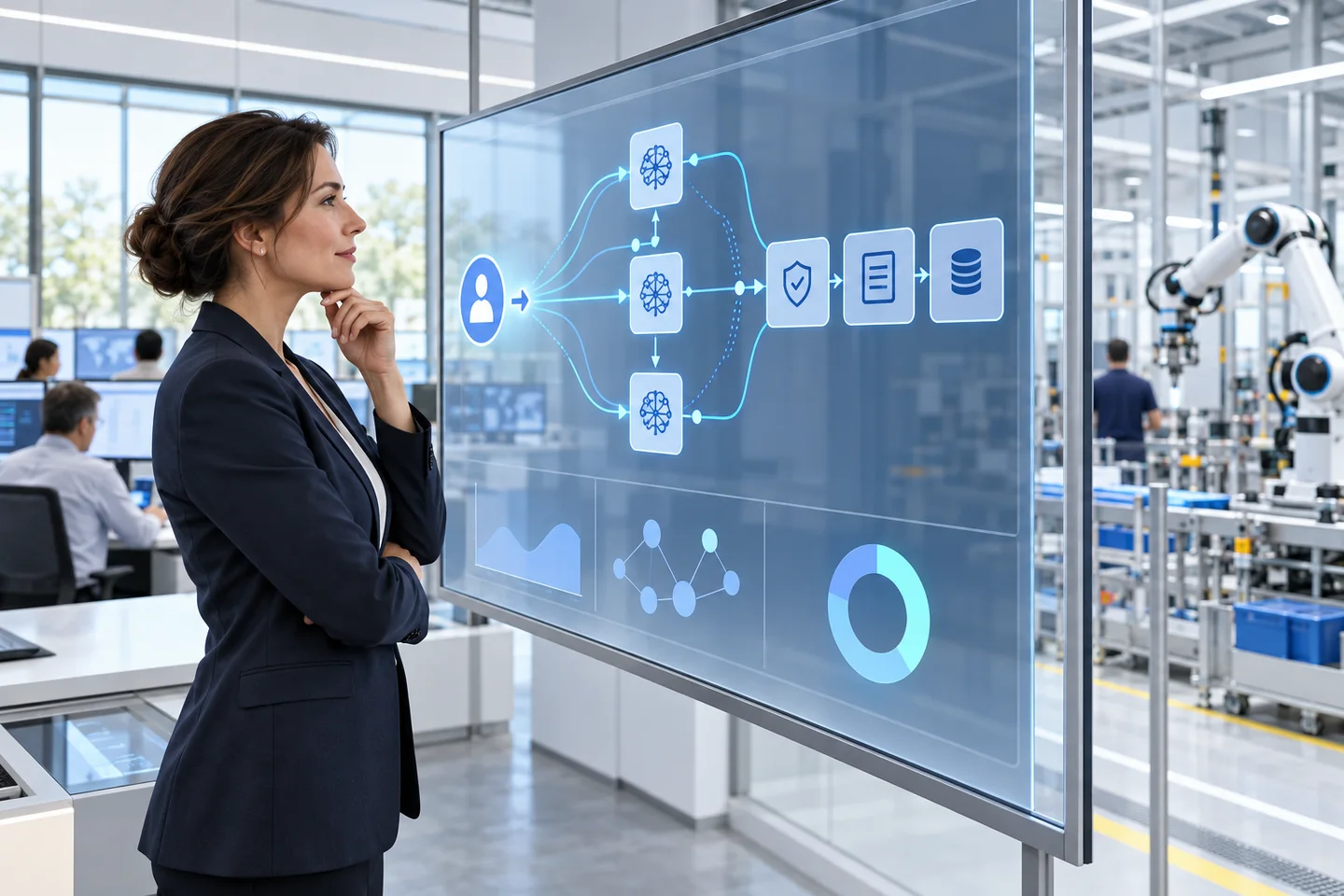
A factory or warehouse camera model must work under the lighting, angles, motion, and occlusion of the real site. We start with scene sampling and an error analysis, then design detection and review workflows around the operational cost of missed events and false alerts.
Part of FIX Solutions JSC · Vietnam-based delivery · Global teams
THE CHALLENGE
A factory or warehouse camera model must work under the lighting, angles, motion, and occlusion of the real site. We start with scene sampling and an error analysis, then design detection and review workflows around the operational cost of missed events and false alerts.
SERVICE OFFERINGS
Use computer vision to interpret images and video for inspection, detection, safety, and operational visibility. Each engagement is scoped around your goals, existing technology, and readiness.
Map the workflows, users, data, and acceptance criteria that shape a useful Computer Vision solution.
Use-case discovery · requirements · architectureUse computer vision to interpret images and video for inspection, detection, safety, and operational visibility. Connect the capability to approved systems and the teams who need it.
computer vision services · image recognition · video analyticsValidate quality and operational behavior, address edge cases, and prepare Computer Vision for a controlled rollout.
Testing · governance · monitoring · adoptionFor packing verification, a camera observes the packing station and associates detections with a shipment window. The system compares visible items with the expected order and sends uncertain mismatches to an operator. It retains the relevant evidence according to site policy. Hidden items or unreadable labels are treated as unresolved rather than counted as verified.
Report precision and recall per event type, false alerts per camera-hour, missed-event rate, detection delay, and performance under each operating condition. Use site-held-out footage to test generalization.
WHY FIX INTELLIGENCE
FIX Intelligence is the AI services division of FIX Solutions JSC. We bring AI, data, software, and cloud delivery together, with a plan tailored to your systems and operating context.
HOW WE WORK
Review the goals, workflows, users, constraints, and current systems relevant to Computer Vision.
Agree on architecture, integrations, data requirements, risk controls, and measurable acceptance criteria.
Implement the solution in focused increments, test representative scenarios, and incorporate feedback from your team.
Prepare handover and monitoring, support adoption, and prioritize improvements using real operational results.
RELATED INSIGHTS
A practical 2027 outlook on intent-driven software, digital provenance, multiagent systems, AI-native development platforms, Physical AI, and intelligent automation.
Read article
How to prepare multilingual speech and video data, evaluate multimodal models, and measure voice agents against real service requirements.
Read article
A practical framework for LiDAR annotation, sensor fusion, robot demonstration data, world-model rollouts, and safe deployment of physical AI.
Read articleFREQUENTLY ASKED QUESTIONS
Potentially. Resolution, frame rate, stream access, placement, and lighting must support the target event. A scene assessment identifies whether camera adjustments or additional capture points are needed.
No. Operational usefulness depends on event frequency, alert burden, missed-event cost, and response workflow. Evaluate those measures on representative site footage.
Consider local inference when bandwidth, latency, privacy, or connectivity makes continuous cloud streaming unsuitable. Compare hardware maintenance and model update requirements as part of the decision.
START A CONVERSATION
Share your goal and our team will follow up to discuss a useful next step for Computer Vision.