What Deep Learning is—and when it helps
Deep Learning is a family of machine-learning methods based on neural networks with multiple layers that learn useful representations from data. It has enabled substantial progress in language, images, audio, forecasting, and other complex tasks. It can reduce the need to manually define every relevant feature when sufficient, suitable data and compute are available.
A complex model is not automatically the right model. For smaller datasets, stable tabular decisions, or highly constrained policies, simpler statistical or rule-based approaches may be easier to interpret, validate, and maintain. Begin with the problem and compare candidate methods against a meaningful baseline instead of assuming that model complexity creates business value.
Start with a well-defined business task
Specify what the model receives, what it predicts or generates, and how a person or downstream system uses the result. A vague objective such as “use AI to improve quality” is difficult to evaluate. A concrete task might be identifying a known defect category in inspection images or forecasting demand at a defined planning horizon.
Set acceptance criteria with the people who own the decision. Measure errors according to their real consequences: a missed defect may be more costly than an unnecessary manual inspection. Define thresholds, review paths, and operating conditions before comparing models, and identify whether the model is advisory or allowed to trigger a downstream action.
Build data and evaluation that reflect reality
Deep Learning depends on examples that reflect the environment where the model will be used. Check data provenance, labeling consistency, representation across relevant conditions, and potential leakage between training and evaluation. Historical data may omit rare failures or encode past process biases, so aggregate performance can overstate readiness.
Keep an evaluation set separate from model development and include edge cases, shifts in operating conditions, and examples where predictions should be uncertain. Choose metrics that match the business task, examine error slices, and have domain experts review results. When ground truth is difficult to establish, document the limits of the evaluation rather than implying precision the evidence cannot support.
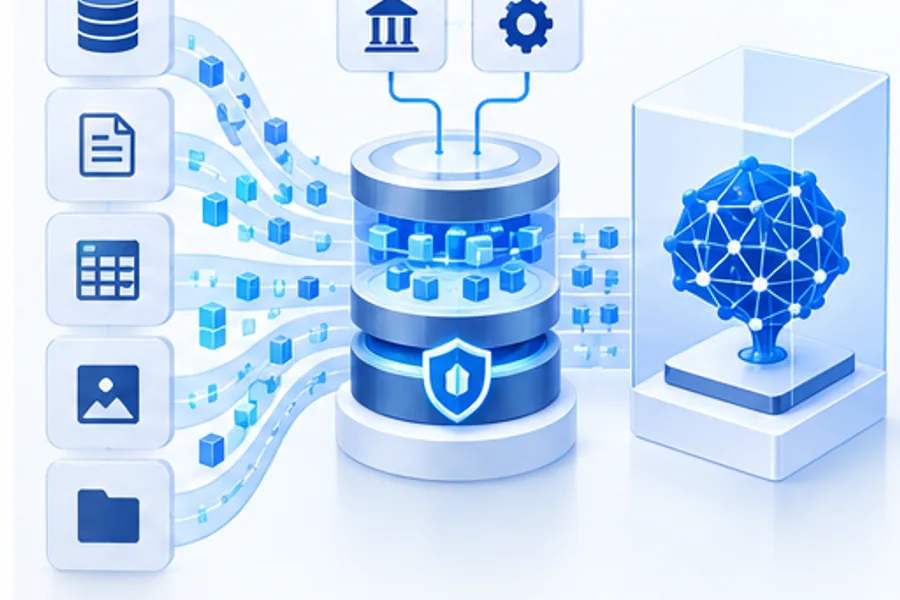
Explore: Building AI-ready data foundations
Plan deployment and lifecycle operations
Deployment choices include cloud services, private infrastructure, and edge devices. Consider latency, connectivity, hardware, privacy, data residency, update cadence, and the need to operate during outages. Production design should include reproducible training, versioned data and models, access controls, model-serving health checks, and a path to roll back.
Monitor input drift, quality indicators, latency, resource use, and downstream outcomes. A change in sensors, suppliers, customer behavior, or business policy may invalidate earlier assumptions. Assign owners for incident response and retraining decisions, and require evaluation before replacing a production model. Lifecycle cost includes data maintenance and operational support, not only initial training.
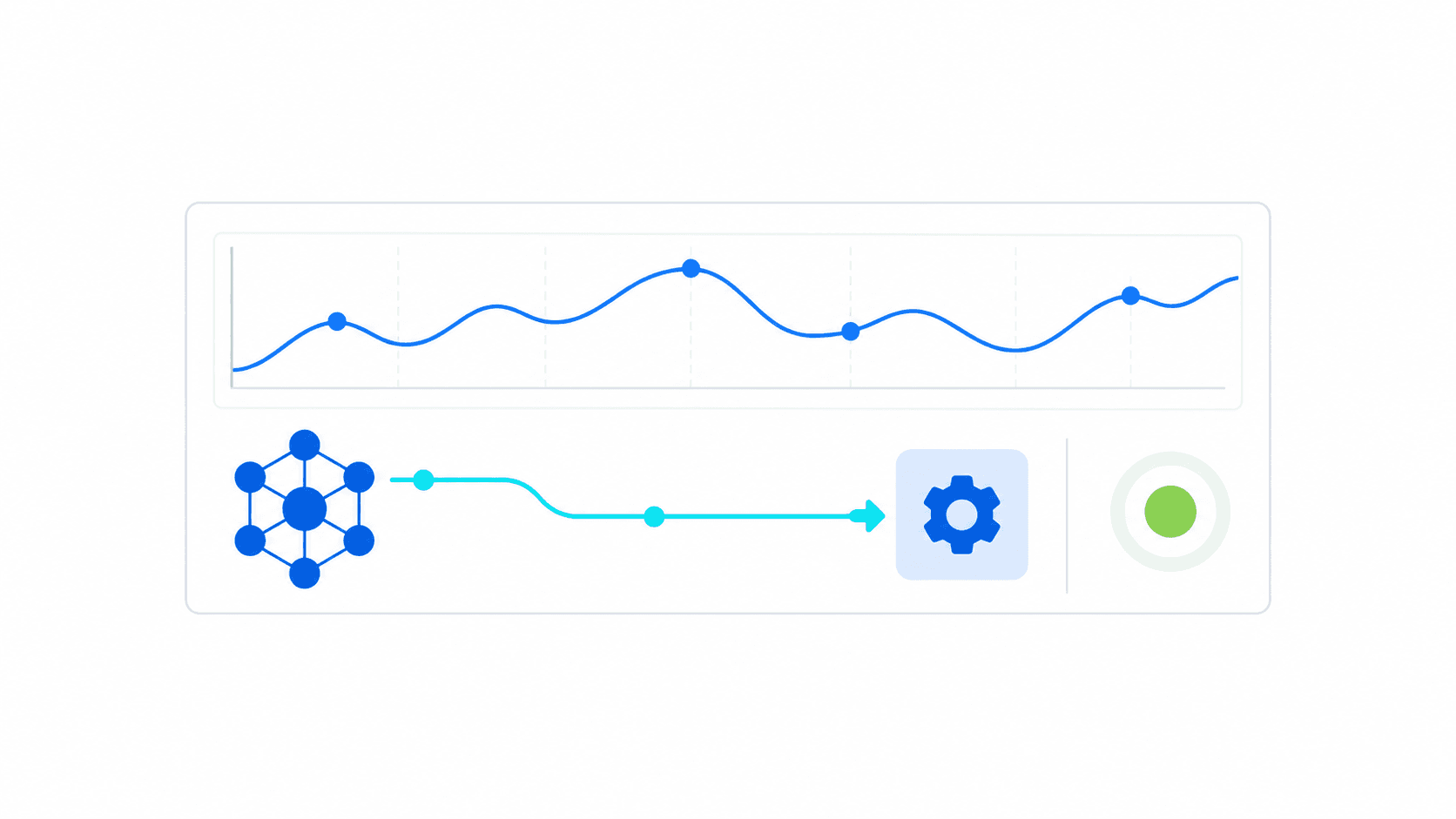
Explore: Moving an AI pilot into production
Use a defect-detection experiment to compare model choices
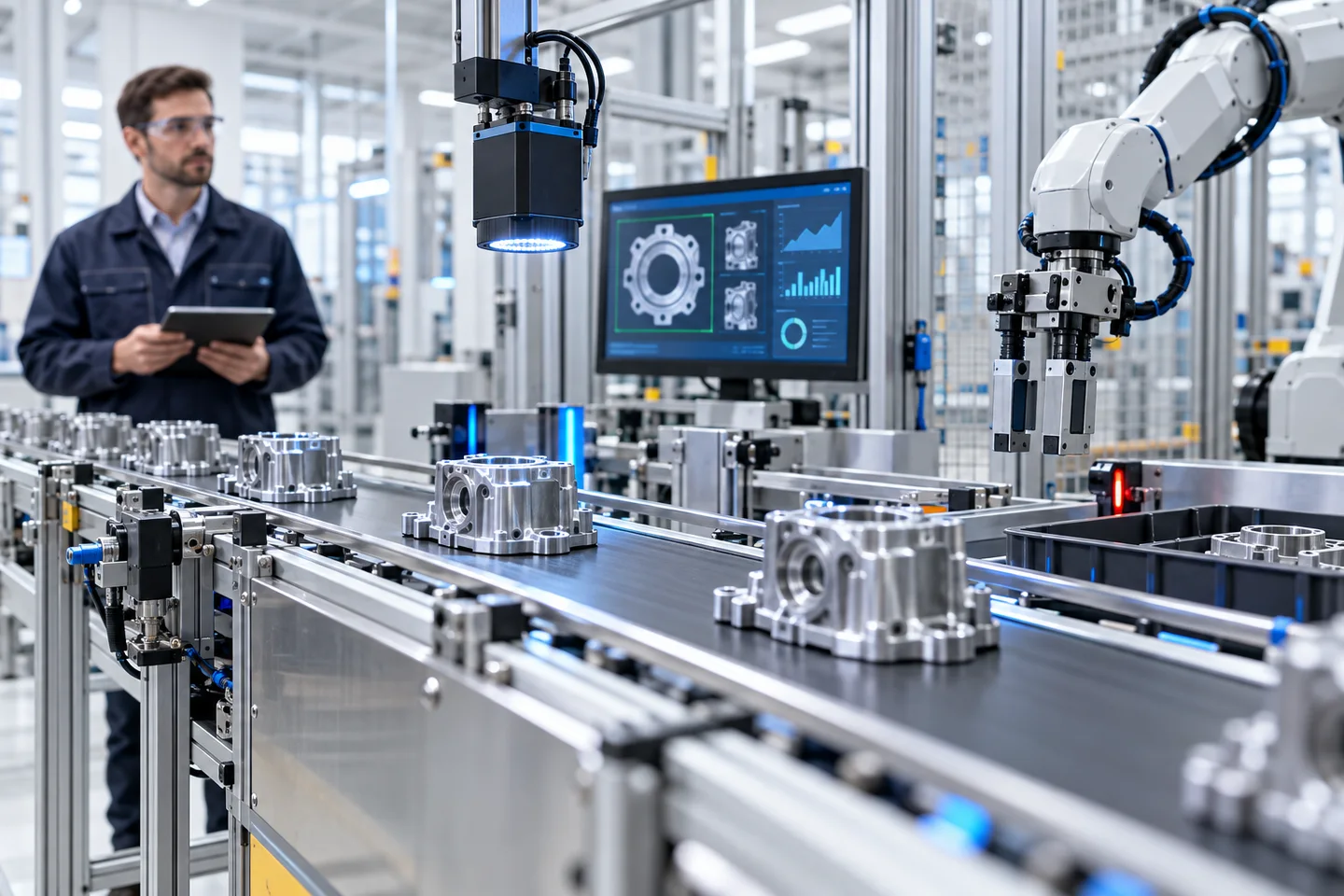
For a visual defect task, first define what makes an item defective and how uncertain cases are reviewed. Establish a simple baseline using existing inspection rules or a smaller model. Then compare a deeper network or a pretrained model adapted to the task. Keep the inspection conditions and evaluation set stable so the comparison measures a model change rather than a different selection of images.
Avoid placing near-identical images from the same production item in both training and evaluation. Split by the physical item, production period, or another boundary that reflects deployment. Review rare defects independently from common normal images. A high overall accuracy may simply reflect that most products have no defect, leaving the important failure category poorly assessed.
Choose the threshold using the operational error budget
An inspection threshold changes both missed defects and unnecessary manual reviews. Plot or tabulate that trade-off and ask the production owner how many review cases the line can actually handle. If the proposed threshold overwhelms inspectors, the system may be impractical even when its offline metrics look favorable. Consider an explicit uncertain category rather than forcing every image into pass or fail.
Test inference on the intended hardware with realistic image transfer and preprocessing. Record latency variation, memory use, and behavior when the camera feed is delayed. Document which product variants are supported and require evaluation before adding a new variant. A defensible deep-learning investment includes the capture and review process needed to make the model useful over time.
Explore: Computer vision deployment under real capture conditions
Make the investment case with measured outcomes
Estimate the complete cost of data preparation, labeling, compute, integration, monitoring, human review, and ongoing maintenance. Compare that with verified improvements to throughput, quality, waste, service, or risk. Pilot with a controlled scope and define stop conditions if performance or adoption falls short.
Deep Learning is most useful when the task benefits from learned patterns and the organization can sustain the data and operating requirements. A successful demonstration is a starting point. Scale only after performance has been tested in representative conditions and the business has a dependable way to detect, review, and correct failures.