What AI Developers do
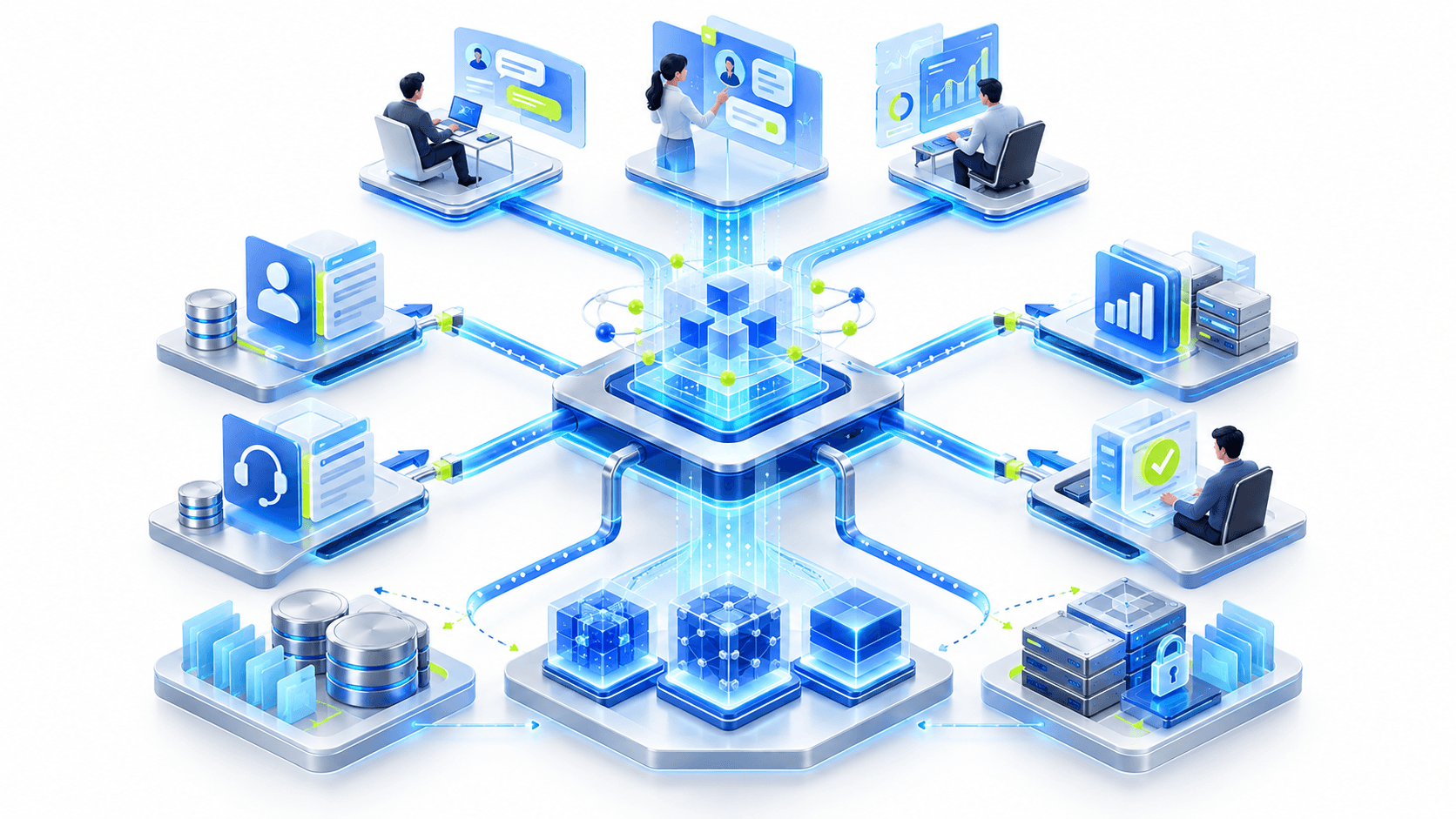
AI Developers design and build software products that use machine learning, language models, or other AI capabilities to solve a defined user or business problem. Their work may include integrating model APIs, building retrieval and orchestration layers, connecting data and business systems, creating user experiences, and implementing evaluation and monitoring.
The role is broader than writing prompts or calling a model endpoint. A dependable AI feature needs ordinary software engineering: clear interfaces, authentication, error handling, testing, performance management, and maintainable deployment. Developers also need to understand model limitations and ensure the application presents outputs honestly and safely.
Skills that matter across the AI development lifecycle
Strong fundamentals include programming, API design, databases, distributed systems, testing, and secure software practices. AI-specific skills include model selection, prompt and context design, retrieval, tool integration, structured outputs, evaluation, and observability. The exact mix depends on whether the team is building a model-backed application, a computer vision product, a data pipeline, or an agentic workflow.
AI Developers also work across disciplines. They need to ask domain experts what counts as a correct result, collaborate with data specialists on data quality and permissions, and work with product teams on user expectations. Communication is essential because model behavior is probabilistic and must be translated into clear product constraints and testable acceptance criteria.
Build a team around the product, not a job title
A small product may be delivered by full-stack engineers with access to platform and domain specialists. A larger or higher-risk system may need dedicated ML engineering, data engineering, security, UX research, quality, and operations roles. Avoid assuming that one AI Developer can own every layer from business discovery to production risk management.
Make ownership explicit: who approves the use case, maintains source data, evaluates outputs, manages model and prompt changes, responds to incidents, and supports users? Cross-functional ownership prevents an AI feature from becoming an orphaned prototype once its original developers move on.
Turn prototypes into production software
Start with a workflow and baseline, then build the smallest implementation that can be evaluated with representative cases. Keep business rules and permissions in deterministic services. Treat model responses as inputs that may be incomplete or incorrect, validate output formats, and verify any action through the system that records it.
Before release, test normal and edge cases, authorization boundaries, latency, failures, and recovery. Establish logging that supports investigation without retaining unnecessary sensitive content. Stage deployment, define a fallback, and assign an owner for monitoring and updates. A compelling demo is useful for learning, but it does not establish operational readiness.
Explore: Moving an AI pilot into production
Use a production work sample when evaluating developers
Give a candidate a small repository with a model-backed extraction feature, an output schema, and a few representative failure cases. Ask them to add a supported field, handle malformed output, and explain how they would protect source data. Assess the resulting code, tests, trade-offs, and documentation. A live exercise should be bounded and appropriate to the role, not unpaid production work.
Look for an engineer who can identify when ordinary code should handle validation and when a model call is justified. Ask how they would investigate a new extraction error after a prompt change and how they would roll back. The strongest evidence is a maintainable implementation and clear reasoning about failure, rather than familiarity with a long list of framework names.
Define the team’s first production ownership agreement
Before onboarding, assign a product owner for acceptance, a domain reviewer for correctness, an engineering owner for releases, and an operational owner for incidents. Several roles may be held by the same person in a small team, but each responsibility should still be explicit. Provide approved development data and document which systems the team may access.
For an initial milestone, ask the team to ship one narrow feature with a versioned evaluation set, deployment instructions, cost visibility, and a tested fallback. Review whether another engineer can run and modify it from the documentation. This establishes a concrete standard for AI delivery and helps avoid dependence on the developer who created the first successful demonstration.
Explore: How generative AI engineers operate the surrounding system
Measure engineering outcomes and keep improving
Evaluate task success, quality, user effort, error recovery, latency, cost per accepted outcome, and maintenance burden. For development productivity, include review time, defects, and downstream change quality rather than counting generated code. Compare the AI-assisted workflow with its baseline and segment results by task type.
After launch, review failures and user feedback, update evaluations as requirements change, and make model or prompt changes through the same disciplined release process as other software. AI Developers deliver lasting value when the product can be understood, tested, operated, and improved—not merely when it can generate an impressive first response.