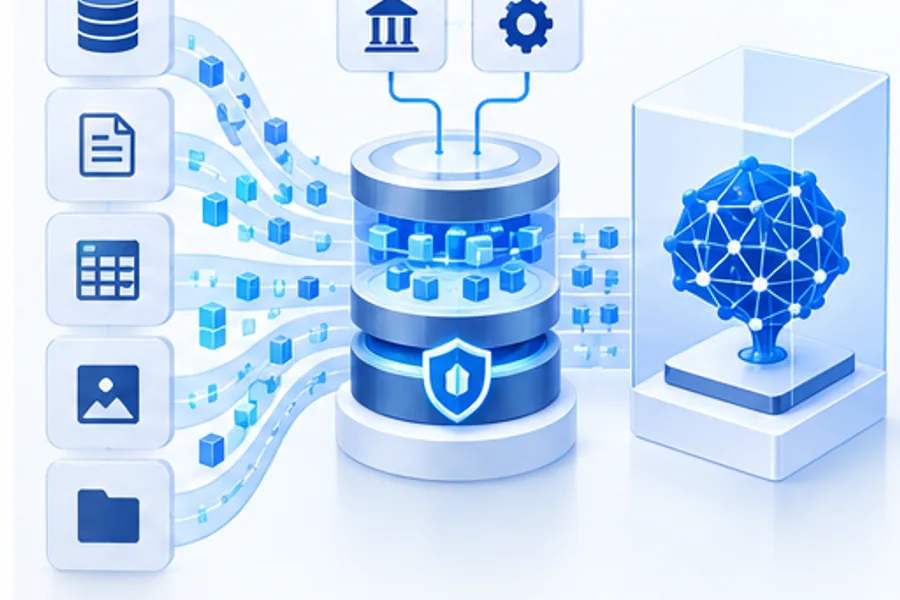
What MLOps Consulting addresses
MLOps Consulting helps teams define how machine-learning systems move from experimentation to supported production services. It can cover lifecycle assessment, deployment standards, platform and tooling choices, model governance, monitoring, team responsibilities, and implementation planning.
The output should fit the organization’s actual portfolio and constraints. A team with a few batch models may need a different approach from one operating real-time models across regulated products. The objective is an operating model that makes quality, change, and accountability manageable.
Explore: MLOps Consulting
Map the current lifecycle and constraints
Inventory models, intended uses, owners, data dependencies, environments, deployment frequency, and existing monitoring. Trace how data is prepared, experiments are recorded, approvals are made, releases happen, and incidents are handled. Identify manual steps and the evidence currently available for troubleshooting.
Assess infrastructure, access controls, privacy requirements, model criticality, team skills, and integration with CI/CD and data platforms. Include business and risk owners so standards reflect decision consequences and operational responsibilities rather than technical preference alone.
Define standards for safe, repeatable delivery
Agree on the minimum lifecycle record for code, data references, configuration, model artifacts, evaluation results, approval, and deployment. Define validation and promotion gates, staged rollout, rollback, and how changes to data or thresholds are reviewed. Keep standards proportional to risk and avoid process that teams cannot sustain.
Set monitoring expectations for service health, input data, model behavior, and business outcomes. Define who investigates alerts, who approves retraining, and how a model is paused or retired. Monitoring and retraining are related but separate decisions: a signal should trigger investigation, not an automatic release of a new model.
Assess the operating model across one complete release
Select a representative model and trace it from data preparation to a production decision. Identify where a person approves data, signs off evaluation, changes infrastructure, and responds to degraded outcomes. Record undocumented handoffs and dependencies on individual engineers. A maturity questionnaire is less useful than evidence showing whether the organization can reproduce and safely reverse a real release.
The assessment should deliver a responsibility matrix, artifact inventory, release controls, and monitoring requirements. Distinguish capabilities shared across teams from controls specific to a use case. A reusable model registry may be a platform concern, while acceptance criteria for a financial prediction remain with qualified business and risk owners. Avoid assigning every decision to a central platform team.
Prioritize improvements by failure cost and ownership
Start with gaps that could make a release untraceable or prevent recovery: missing lineage, unversioned features, unclear approval, or an untested rollback. Then prioritize improvements to developer experience and automation. Give each milestone an observable outcome, such as reproducing an evaluation from recorded artifacts, rather than counting tools installed or dashboards created.
Validate the proposed operating model through a supervised release and a failure exercise. Confirm that the receiving team can investigate a broken feature feed, distinguish model and infrastructure faults, and restore the last approved version. Consulting should leave the client with explicit decisions and usable operating procedures. Ongoing MLOps services can then execute those procedures under agreed support responsibilities.
Write acceptance criteria for the platform handover
Specify what the receiving team must demonstrate: a new model can be registered, evaluated, promoted with approval, monitored, and retired using documented procedures. Ask an engineer who did not build the pilot to execute that sequence. Any missing permissions, undocumented configuration, or manual artifact copying becomes a handover finding rather than an invisible dependency on the consultant.
Clarify who maintains shared templates, who owns individual model quality, and who pays for recurring compute and storage. Set a review point for controls that are too burdensome or routinely bypassed. A useful roadmap includes a support model and a retirement path for the old workflow. Evaluate portability by confirming that the client can access code, artifacts, and configuration in approved systems. This makes the operating model assessable without assuming that one particular platform or vendor is necessary.
Build a roadmap that teams can adopt
Choose a representative model to pilot the operating pattern. Measure reproducibility, deployment effort, release reliability, incident response, and team usability. Use feedback to simplify templates and automation before extending them to more products or teams.
Plan for enablement, documentation, ownership transfer, and ongoing platform costs. MLOps Consulting should make internal teams more capable of operating the lifecycle after the engagement. Expand based on demonstrated value, and revisit the operating model as model types, regulatory needs, and infrastructure change.