What ML Consulting helps teams accomplish
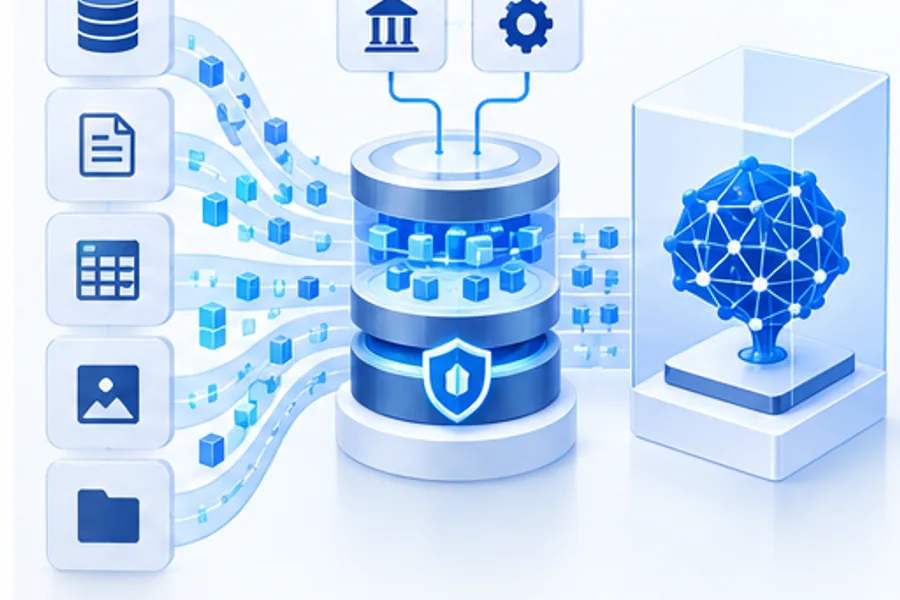
ML Consulting supports organizations in identifying where machine learning can improve decisions or automate pattern-based tasks, then determining what it would take to deliver the capability. Engagements may cover problem framing, data assessment, model strategy, experiments, evaluation, deployment architecture, MLOps, and team enablement.
A useful outcome is a clear recommendation to proceed, gather evidence, redesign the process, or not use machine learning. That recommendation should be based on task value, available data, error costs, operational constraints, and realistic alternatives—not a preference for a particular algorithm.
Frame the prediction or decision problem
Define the decision the model is intended to support, when the prediction is needed, who acts on it, and what happens when it is wrong or unavailable. Specify the target, available features, decision threshold, and the current baseline. A technically accurate model may still have little value if it arrives too late or does not change an action.
Work with domain owners to understand error asymmetry, review capacity, and operational recourse. Identify whether the model is advisory or influences access, safety, financial outcomes, or other consequential decisions. This framing determines appropriate metrics and oversight.
Assess data and evaluation readiness
Assess data provenance, permissions, freshness, completeness, label quality, representativeness, and whether training examples reflect production conditions. Look for leakage, historic process changes, and missing examples from important segments. If data gaps remain, estimate the time and effort needed to address them before promising model performance.
Design evaluation that reflects business costs, not just a single aggregate score. Use held-out and time-aware samples where appropriate, examine performance across relevant groups and edge cases, and compare with simple rules or existing processes. Document uncertainties where ground truth is limited.
Explore: AI-ready data foundations
Plan model delivery and lifecycle operations
Choose an approach based on evidence, constraints, and the required operating environment. Plan how data is prepared, how models are trained and versioned, and whether inference is batch, real-time, streaming, or edge-based. Address access, deployment, latency, cost, rollback, and integration with decision systems.
Define monitoring for service health, input changes, prediction behavior, and downstream results when labels become available. Assign owners for incidents, threshold changes, retraining, and retirement. A model that cannot be monitored or supported should not be treated as production-ready.
Decide whether machine learning is necessary
For a proposed churn model, first define the decision it would influence, who acts on the prediction, and the intervention available. Compare the idea with rules or a simple statistical baseline. A model can rank customers accurately yet create little value if the business cannot contact them in time or has no useful retention offer. Prediction quality and decision usefulness require separate evaluation.
Inspect whether the intended outcome can be labeled consistently and whether the relevant information existed at prediction time. A field populated after cancellation can create misleading offline accuracy through leakage. Review missingness, customer permissions, coverage over time, and population changes. The readiness assessment should identify these constraints before recommending model complexity or a production platform.
Specify a decision-ready proof of value
Agree on a holdout strategy, baseline, cost assumptions, and business acceptance criteria before training. Report performance at the operating threshold the team can actually use, including false positives and missed cases. Check important customer segments where appropriate and lawful. If outcome labels arrive slowly, explain how that affects the evaluation period and the confidence of any investment decision.
The deliverable should support a clear choice: proceed, improve data, use a simpler approach, or stop. Include an integration outline, estimated operating effort, named owners, and unresolved risks. A successful notebook does not establish deployment readiness. Require a practical plan for serving predictions, collecting feedback, monitoring outcomes, and reverting to the current decision process when the system is unavailable.
Evaluate the intervention that follows a prediction
For churn prevention, define how many customers the team can contact and what action it can offer. Evaluate the model at that contact capacity instead of selecting a threshold solely for a favorable aggregate metric. A customer who would remain without intervention should not be counted as a retention success caused by the model. Where feasible, use an appropriately designed comparison to evaluate the intervention itself.
The business case should connect incremental outcomes with contact costs, incentives, staff effort, model operations, and customer complaints. If the organization cannot measure incremental effect, state that uncertainty in the investment recommendation. A readiness report can recommend a controlled business experiment before a larger model build. This keeps ML consulting focused on a decision the organization can act on, rather than treating a well-ranked prediction list as a complete commercial solution.
Explore: A practical approach to measuring AI costs and realized value
Make a responsible investment decision
Estimate the total cost of data engineering, labeling, compute, integration, expert review, maintenance, and governance. Compare it with expected process improvements, and distinguish observed pilot results from projections. Set acceptance thresholds and stop conditions before an experiment begins.
ML Consulting should strengthen the client team’s ability to validate and operate models after the engagement. Transfer assumptions, evaluation assets, documentation, and operational procedures. Scale only when the model performs in representative conditions and the business has a clear path to respond when those conditions change.