The work of ChatGPT Developers
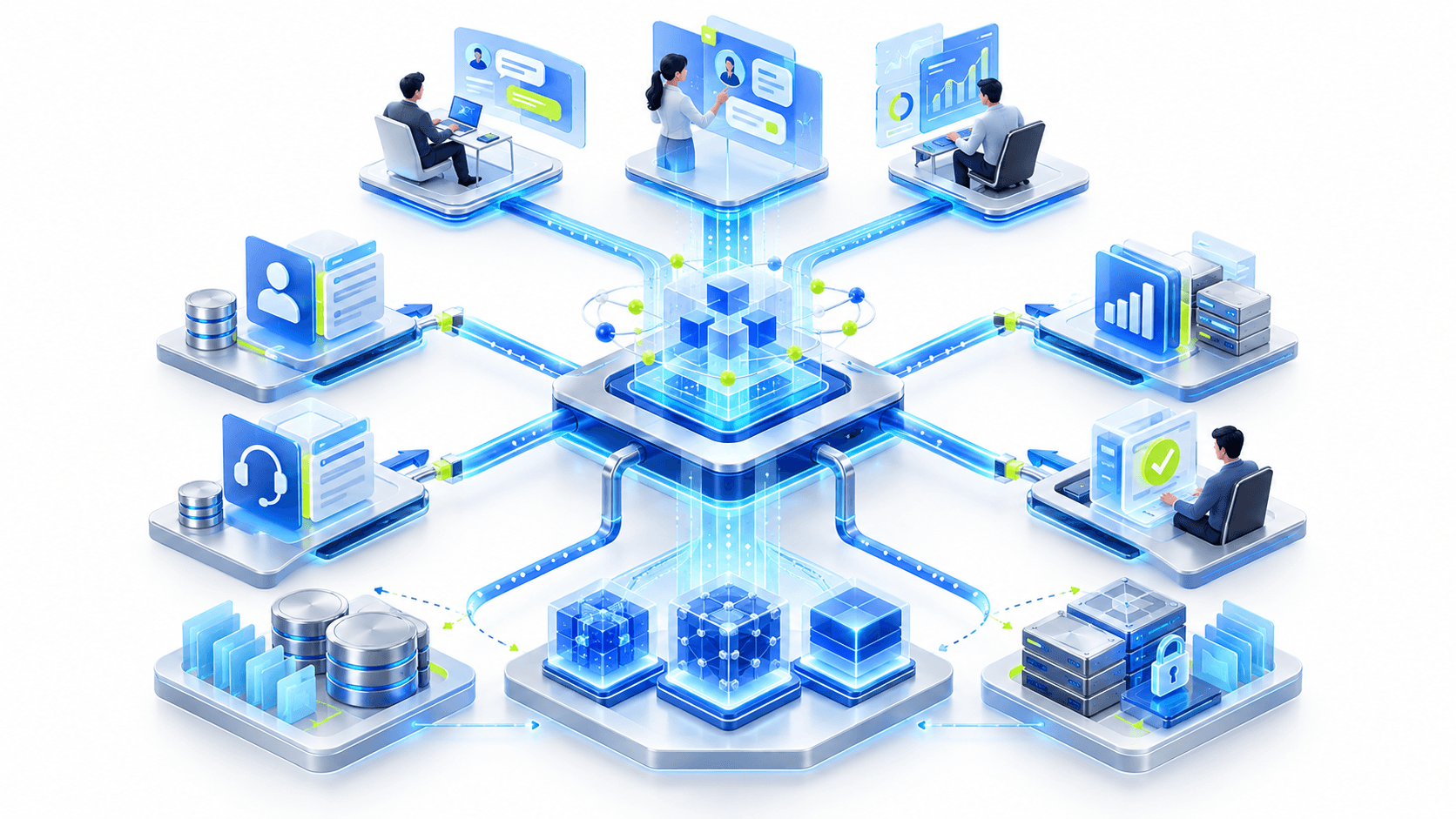
ChatGPT Developers build applications that use ChatGPT or compatible language-model interfaces to support real user tasks. They design the experience, connect model APIs, manage conversation context, integrate approved data and tools, and build the software controls needed for a reliable product.
The model is only one dependency. Developers must account for authentication, rate limits, timeouts, data handling, prompt and model versions, response validation, and user support. Product quality depends on how these pieces work together, not on model capability in isolation.
Design the application architecture
Keep the user interface, application backend, model integration, retrieval, and business services separated enough to test and change independently. Call model services from a controlled backend rather than exposing credentials in a client. Store only the conversation state needed for the product, with retention and access aligned to the use case.
Use structured outputs and schema validation when downstream code expects specific fields. Treat generated content as untrusted input: validate it before display or use, escape content appropriately, and never allow model text alone to authorize an operation. For sensitive or high-impact tasks, require explicit user confirmation or review.
Give the model useful context and bounded tools
When an answer depends on current product or business information, retrieve from approved sources and include only context the user is authorized to see. Provide citations or references when they help users verify the answer. Retrieval can improve relevance, but it does not guarantee that the model will interpret every passage correctly; test source selection and answer support.
If the assistant can call tools, define narrow operations with typed inputs, explicit authorization, and clear success or error responses. Keep business rules in the services that own them. Verify writes through the system of record, limit retries, and make the result visible to the user only after confirmation.
Evaluate experience, reliability, and safety
Build test cases from real user tasks, including ambiguous prompts, missing context, conflicting information, long conversations, and requests outside scope. Assess task completion, factual support, instruction following, citation quality, refusal behavior where appropriate, latency, and cost. Include human review from people who understand the domain.
Test security boundaries such as unauthorized data requests, unsafe tool arguments, and malicious instructions embedded in retrieved content. Measure the complete workflow and keep a baseline. A response that reads well may still be incorrect, incomplete, or operationally useless.
Treat each model interaction as a bounded application request
For an invoice-extraction feature, create an application request identifier before calling the model. Associate it with the authorized document, expected output schema, processing status, and configuration version. Validate returned fields for both structure and business meaning. A well-formed date or amount can still be incorrect, so retain the source location for review and apply deterministic reconciliation checks.
Do not let an interrupted browser session trigger uncontrolled duplicate processing. Reconcile the request state on reconnect and show whether work is queued, running, awaiting review, or complete. Distinguish an incomplete model response from a provider error and a failed business validation. These outcomes need different user messages and retry decisions.
Separate a provider adapter from the application’s policy
Keep provider request formatting and response parsing behind a small interface. The application should own access checks, allowed tools, retention decisions, budgets, and the definition of completion. This boundary makes it easier to test provider failures and assess another model without rewriting account permissions or transactional rules. It does not make models interchangeable without evaluation.
Use a regression set that includes empty output, invalid fields, a timeout, an oversized document, and a valid response that conflicts with source evidence. Test whether the user can correct an extraction without losing the original record. Before switching a model or API configuration, rerun the same acceptance set and compare reviewer effort as well as extraction quality, latency, and cost. Keep a fallback that preserves the user’s work.
Explore: Document-processing workflows and extraction verification
Operate the feature responsibly
Prepare for provider outages, rate limits, model changes, and cost spikes. Use timeouts, appropriate fallbacks, usage limits, and monitoring. Track errors, user corrections, escalation, quality signals, and cost while minimizing sensitive data in logs. Provide support teams with enough diagnostic context to investigate without exposing unnecessary conversation content.
Version prompts, model settings, tools, and evaluations together. Roll out changes gradually and compare results before broad release. ChatGPT Developers should treat a model-backed feature as a maintained product capability with named owners and an incident plan, rather than a static integration that will keep behaving the same indefinitely.