What an AI Native Factory means for enterprise leaders
An AI Native Factory is a manufacturing operation in which AI is engineered into the production data and decision loop, not bolted on as a standalone inspection demo. It connects machine perception with product and process context, turns model outputs into governed workflow decisions, and measures whether those decisions improve quality, throughput, or cost. The architecture must also support monitoring, human intervention, and controlled change after the system reaches production.
For a CTO or CIO, the strategic objective is not to automate every judgment. It is to make high-value decisions faster and more consistently while preserving operational control. That requires a system spanning cameras and sensors, edge compute, plant and enterprise platforms, data engineering, model operations, and the people accountable for the line. A deep-learning model is one component in that system.
Start with factory context, not images alone
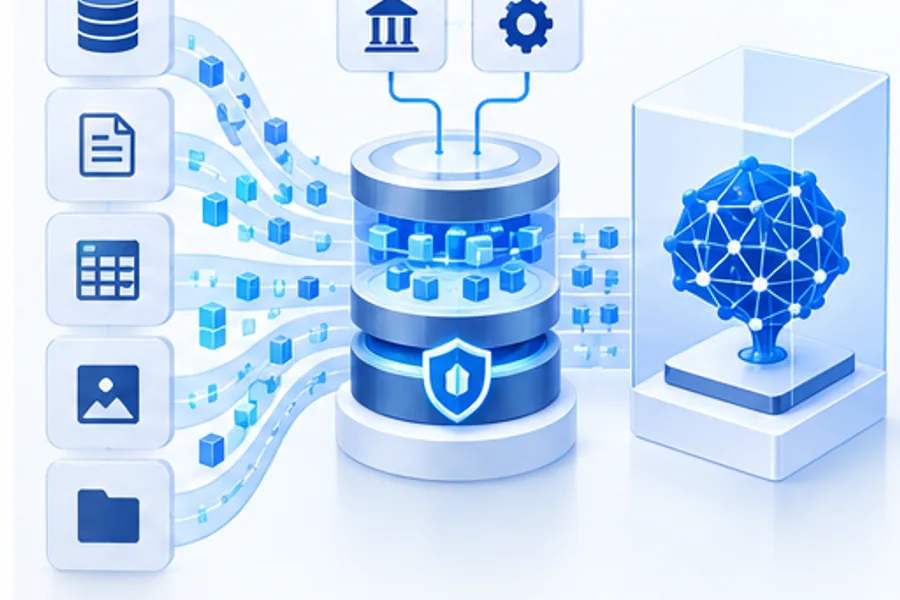
Unstructured images can reveal defects that fixed rules miss, but an image rarely explains the whole production event. The same visual variation may be acceptable for one product recipe and a defect for another. Without line, station, part, batch, recipe, machine state, and inspection outcome, a model result can be difficult to validate or act on. Factory data often sits across vision systems, programmable controllers, manufacturing execution systems, quality platforms, and enterprise resource planning software, each with its own identifiers and timing.
Map the operational decision: what must be detected, when, who owns the disposition, and what evidence is needed? Define an event record linking the image to product identity, station, timestamp, recipe, model version, classification, uncertainty, and final disposition. Synchronize timestamps where practical and preserve the link between prediction and verified quality outcome.
Explore: AI strategy, engineering, and implementation services
Tier 1: Perception and classification at the line
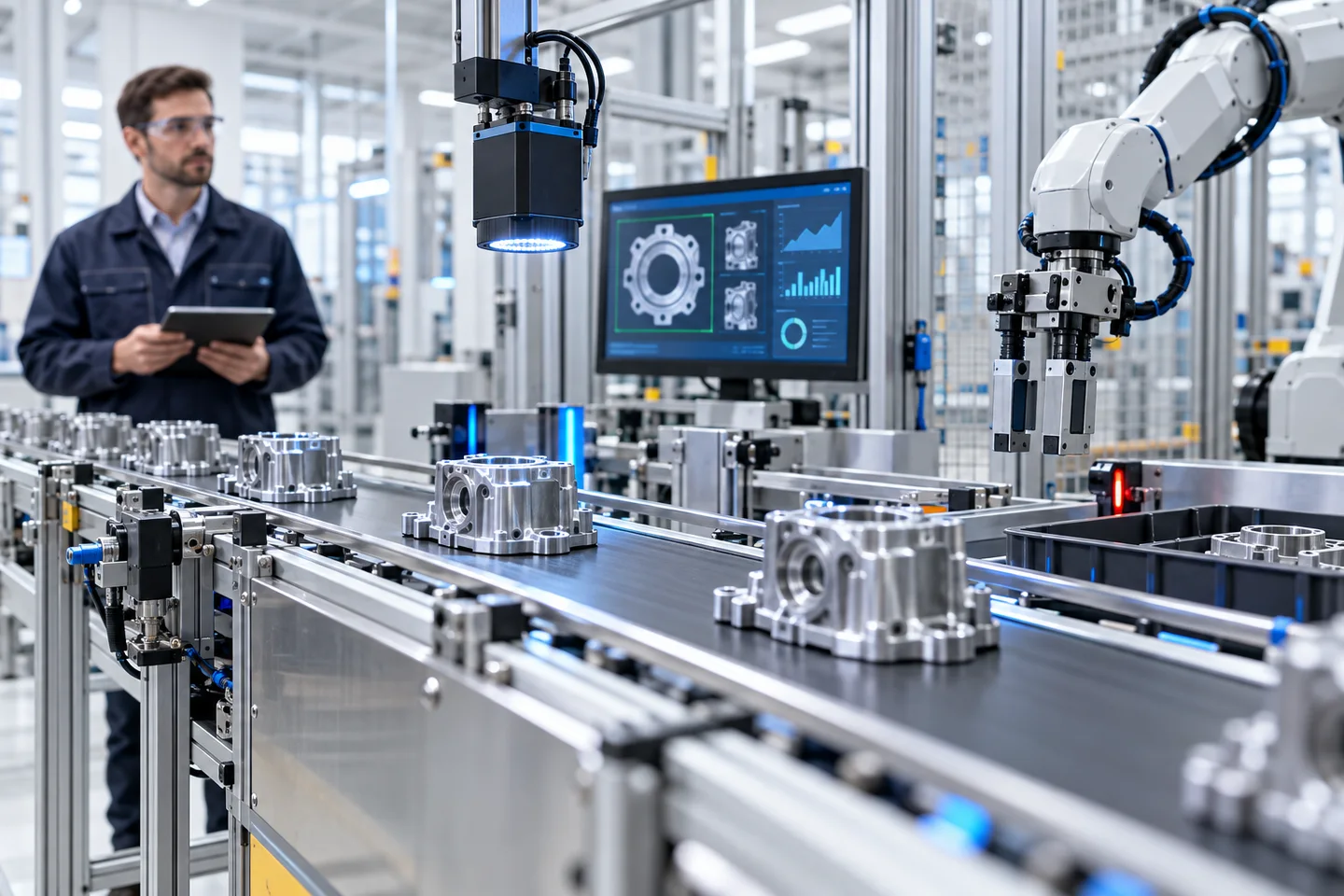
The perception tier captures the physical event and classifies it against a defined inspection task. Deep-learning computer vision can support defect detection, segmentation, classification, measurement, or anomaly identification, depending on the product and available examples. Model selection should follow the production constraint: cycle time, camera geometry, resolution, lighting, compute budget, and the cost of false acceptance versus false rejection.
Treat collection and labeling as engineering work. Include variation across shifts, suppliers, product variants, camera positions, and environmental conditions; review labels with quality specialists, especially for rare defects. Evaluate each critical class separately using precision, recall, false-reject rate, and missed-defect rate. Define an uncertainty band and a human-review route for cases the model should not decide.
Tier 2: Edge-to-cloud orchestration
Run inference close to a line when response time, connectivity, data handling, or local availability makes edge processing the right choice. The edge service can return a decision within the production cycle and continue operating through a temporary network interruption, if designed and tested for that behavior. It should record model and configuration versions, queue events safely, expose health signals, and support a controlled update or rollback.
Use cloud or data-center services for dataset curation, fleet-wide dashboards, model evaluation, training, and lifecycle governance. Avoid streaming every full-resolution image by default; send metadata and selected frames needed for traceability, subject to retention and security requirements. LTE or 5G may suit mobile assets or specific sites, but is not a prerequisite for every factory. Choose connectivity by measured latency, reliability, coverage, and OT security design.
Tier 3: Close the loop without compromising safety
A classification becomes operationally valuable when it reaches the right process. Depending on the risk and line design, the response may be an operator alert, a quality hold, a request for secondary inspection, robotic sorting, conveyor rerouting, or line isolation. Start with shadow mode: record predictions while existing procedures remain in control. Compare the proposed decisions with verified outcomes, investigate disagreement, and confirm that event timing and system integrations behave as expected.
Then progress through advisory and human-confirmed actions before enabling narrowly bounded automation. Confidence can contribute to a decision, but it is not a safety case by itself. Set thresholds using representative validation data and the impact of each error; define what happens when signals conflict, a model is unavailable, or confidence falls below the agreed limit. Keep emergency stops, interlocks, and machine-safety functions independent of the AI decision path. Document manual override, fallback operation, alert ownership, and the conditions for returning a line to normal control.
Control model drift and scale beyond the pilot
Production conditions change: lighting, camera focus, tooling, materials, suppliers, recipes, and product mix can shift inputs or class meaning. Monitor data quality and outcomes, not confidence alone. Track model and dataset versions, class-level quality, abstentions, overrides, false rejects, missed defects, and dispositions. Assign alert owners and document how to investigate, retrain, validate, approve, deploy, and roll back a model. Compare each candidate with the production version before promotion.
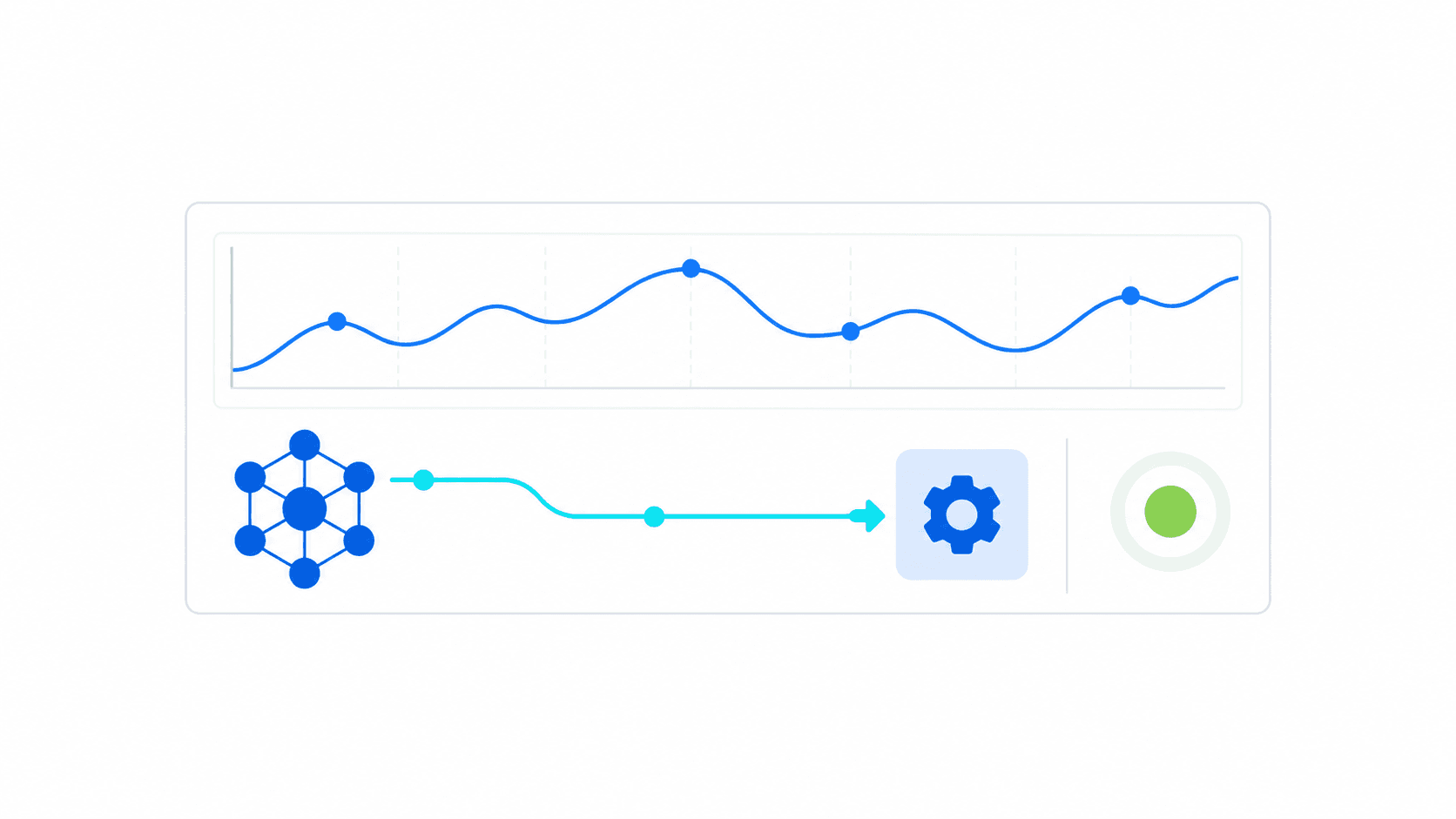
Predictive maintenance can extend the program, but it is a related use case rather than an automatic by-product of visual inspection. Equipment degradation is often better assessed by combining condition or time-series signals—such as vibration, temperature, current, cycle time, and maintenance history—with production context. Start with a specific failure mode and a maintenance decision, then test whether earlier warning improves intervention timing without creating excessive false alarms.
A staged execution roadmap for the AI Native Factory
A disciplined rollout limits technical and operational risk while producing evidence for investment decisions. Select one inspection or process bottleneck with an accountable owner, available ground truth, measurable baseline, and a feasible integration path. Agree in advance on the quality, latency, availability, and safety criteria that must be met before moving to the next stage. The gates below are a practical starting point, not a substitute for site-specific engineering or safety review.
How FIX Intelligence helps build the AI Native Factory
FIX Intelligence, part of FIX Solutions JSC, can support the journey from use-case definition through production engineering. The work can begin with discovery: map the inspection or process decision, assess data readiness and plant interfaces, establish a baseline, and prioritize the use case by operational value and feasibility. From there, teams can design data pipelines and event contracts, develop and evaluate computer-vision models, and integrate edge or cloud components with the existing factory environment.
Production also needs model lifecycle management, monitoring, access controls, human review, documentation, and operator enablement. FIX can define these responsibilities with the client’s OT, IT, quality, security, and operations teams. Scope depends on the facility and risk profile; the goal is a maintainable capability, not a disconnected proof of concept.
For enterprise leaders, the next step is to choose a bounded factory decision and test the full loop: source data, model output, operational response, verified outcome, and ongoing control. When each layer has an owner and measurable acceptance criteria, the AI Native Factory becomes an engineering program the organization can govern and scale.