Why the meaning of SI is changing
For decades, SI has commonly meant system integration: connecting software, data, infrastructure, and business processes so an organization can operate as a coherent whole. That work remains fundamental. When systems cannot exchange reliable information, teams struggle to automate workflows, measure outcomes, or give AI applications the context they need. Integration is not an obsolete phase; it is a foundation for the next one.
Today, AI is changing what organizations expect those connected systems to do. Instead of only moving information between applications, technology can interpret documents, support decisions, coordinate bounded actions, and help people navigate complex workflows. This creates a broader horizon for SI: from integrating systems to integrating intelligence into systems. The shift is strategic, but it should be grounded in practical capabilities that can be measured and governed now.
Define superintelligence carefully
Superintelligence is generally used to describe a hypothetical level of AI capability that would substantially exceed human performance across a broad range of intellectual tasks. It is a debated long-term concept, not a synonym for every current AI model, chatbot, agent, or automation system. The term also does not describe a capability that FIX Intelligence claims to have built or can guarantee for a client.
For technology leaders, the useful question is not to predict a specific arrival date. It is to understand how increasing model capability could change software, decision support, research, operations, and the risks associated with delegated actions. A responsible strategy distinguishes current, testable AI services from future scenarios. It avoids marketing language that promises inevitable outcomes and instead invests in the technical and organizational foundations that remain valuable under multiple possible futures.
The bridge is integrated, governed intelligence
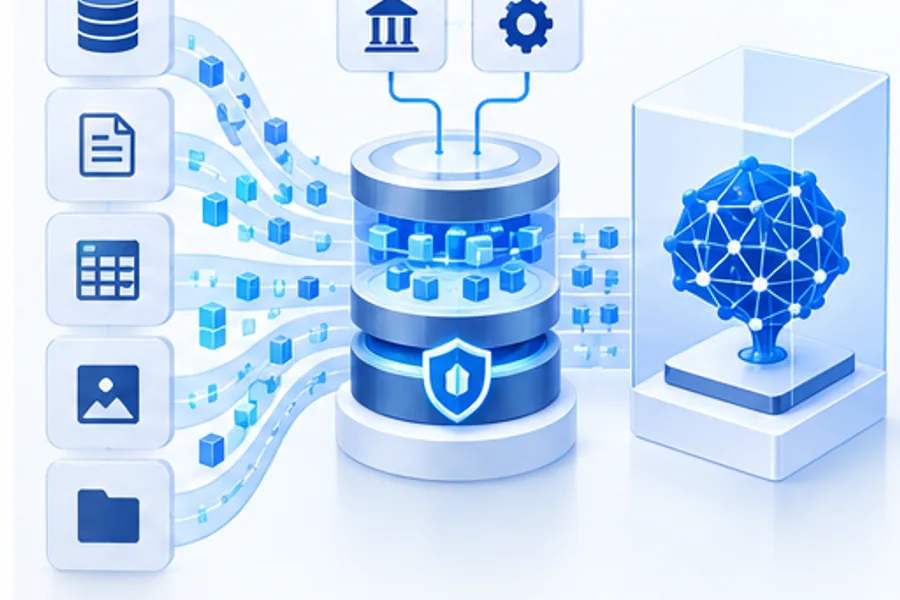
An intelligent enterprise does not emerge from a model alone. It depends on dependable data pipelines, clear semantics, secure identity, interoperable applications, workflow design, evaluation, and people who own decisions. Models and agents can then operate within authorized boundaries, retrieve relevant context, use approved tools, and return work for review where uncertainty or impact requires it.
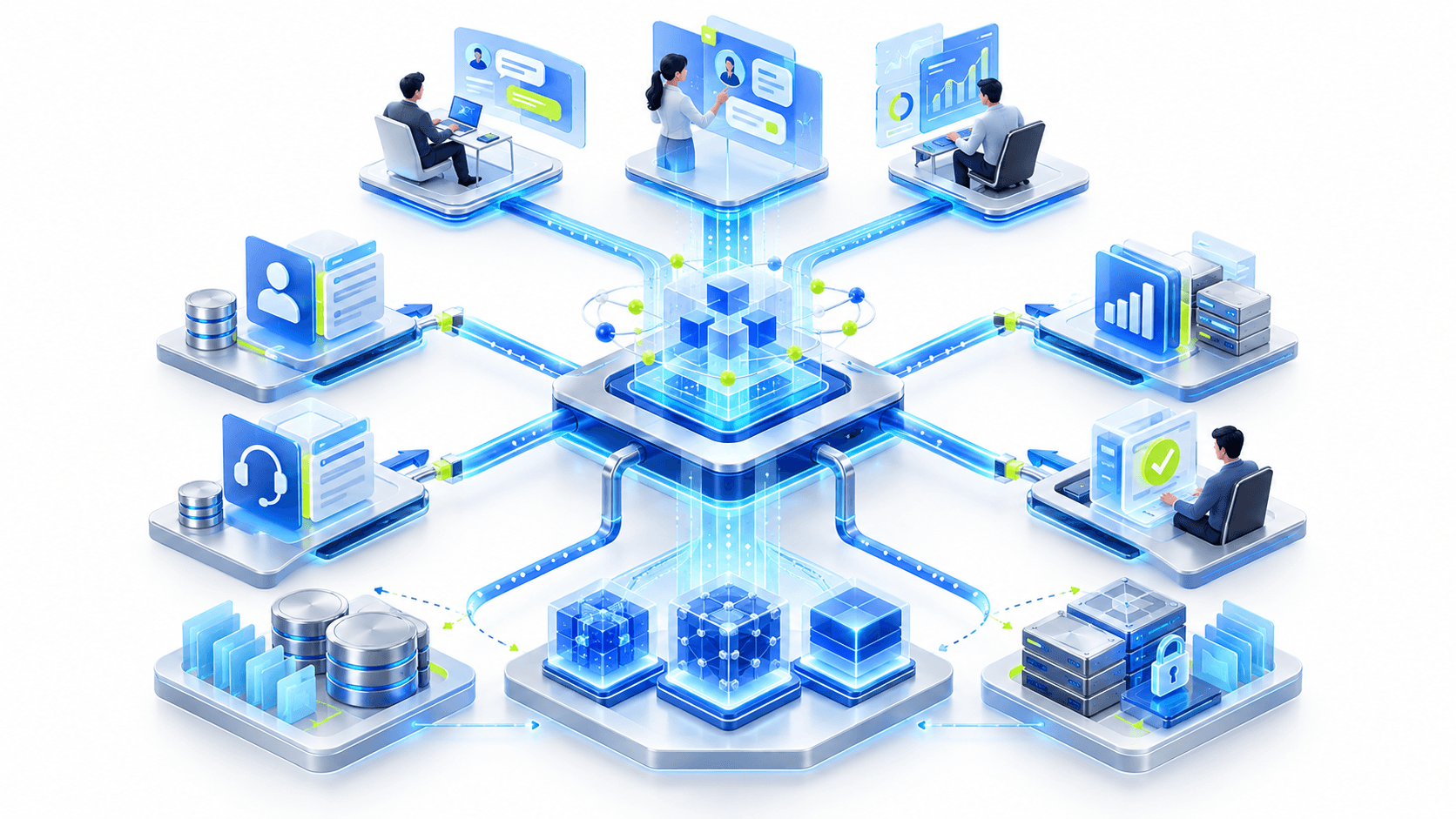
This is where system integration evolves rather than disappears. Integration connects enterprise platforms to model services, retrieval systems, monitoring, and human interfaces. It also establishes where data can flow, which actions are permitted, how a workflow recovers, and how outcomes are measured. Good architecture allows organizations to replace models or providers without rebuilding every process and prevents a promising pilot from becoming an isolated application.
What CTOs and CIOs should build today
Begin with a short list of workflows where better intelligence could create measurable value. Map the current process, data sources, systems, exceptions, affected users, and decision rights. Identify whether the solution needs retrieval, prediction, generation, computer vision, voice, agentic orchestration, or simply better integration and analytics. Establish a baseline and acceptance criteria before selecting a model or committing to a platform.
Invest in reusable foundations: data quality and lineage, API and event patterns, access control, model evaluation, observability, incident response, and role-based training. Keep humans accountable for consequential decisions and test systems under realistic conditions. Design for change by documenting vendor dependencies, portability, cost controls, and rollback paths. These steps prepare the organization for more capable AI without requiring a speculative bet on when superintelligence may emerge.
A new promise for SI, grounded in delivery
The transition from System Integration to Superintelligence is best understood as an evolution in ambition: connect systems first, then make those systems more useful through carefully integrated AI. It is not a claim that integration work is finished or that superintelligence is already available. Leaders should challenge providers to explain what can be delivered today, how it will be measured, what risks remain, and how the organization retains control.
FIX Intelligence, part of FIX Solutions JSC, helps organizations move from strategy and data foundations to AI engineering, integration, evaluation, and production operations. The near-term commitment is practical: build useful intelligence into real workflows, make its limits visible, and govern it responsibly. As capabilities advance, that foundation gives businesses a way to adopt what proves valuable while maintaining security, accountability, and human judgment.
A roadmap that does not depend on predictions
Executives do not need to settle debates about when superintelligence might emerge to make sound decisions today. Use scenario planning to ask how your organization would respond if models became more capable at coding, analysis, planning, or tool use. Consider the opportunities, dependency risks, workforce effects, and controls that would need to change. Separate investments that are valuable now, such as interoperable data and security, from speculative investments that rely on a single forecast.
Create review points tied to observable signals: a new model capability, a changed regulatory or contractual requirement, a material incident, or an expansion into higher-impact workflows. At each point, decide whether to adopt, test, constrain, or defer. Keep governance adaptable and involve the people who will operate the systems. This lets a company prepare for rapid progress without presenting conjecture as a delivery commitment or locking itself into a technology path too early.
How FIX Intelligence expresses the transition
The shift in the meaning of SI is also a shift in the questions a technology partner should help answer. Integration work asks how applications and data will connect. An AI-enabled strategy also asks what intelligence should do, what information it needs, which actions it may take, and how people remain informed and in control. Those questions join architecture, data engineering, AI research, application development, and governance into one delivery conversation.
For clients, this does not mean replacing every system or adopting AI for its own sake. It means finding the right point in a business process to add useful intelligence and making the resulting change supportable. FIX Intelligence can advise, develop, integrate, and help operate those capabilities today. The broader “Superintelligence” horizon is a direction for thought and preparation, while current engagements remain grounded in defined requirements, measurable outcomes, and responsible implementation.