What AIOps Services deliver
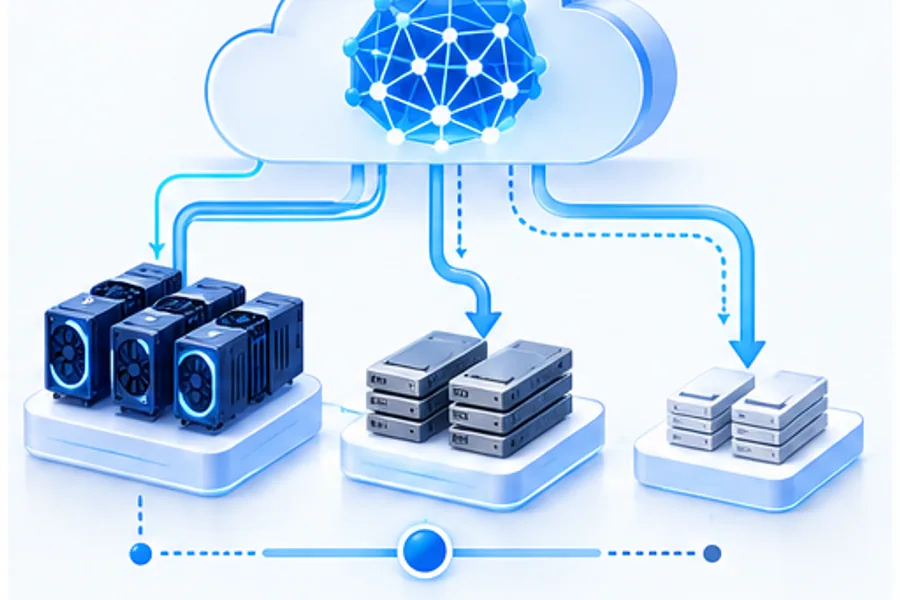
AIOps Services apply analytics, machine learning, and automation to IT operations data and incident workflows. Depending on the environment, work may include alert correlation, anomaly detection, event enrichment, incident routing, runbook assistance, and operational observability.
AIOps is not a single product or a promise to eliminate incidents. It should help teams identify relevant signals, reduce repetitive triage, and restore service with better context. Human operators remain responsible for consequential infrastructure decisions and for validating recovery.
Explore: AIOps Services
Connect telemetry to incident workflows
Start with service maps, logs, metrics, traces, deployment events, incident records, and runbooks. Assess data quality, time synchronization, ownership, access, and retention. Incomplete or noisy telemetry can make automated correlation misleading, so establish reliable service context before adding more automation.
Integrate with the systems responders already use, including ticketing, on-call, change management, and communication tools. Preserve links to the underlying signals and clearly distinguish observed facts from model-generated hypotheses. Do not allow an alert summary to replace investigation evidence.
Automate with guardrails and verification
Begin with low-risk tasks such as grouping duplicate alerts, attaching relevant runbooks, or suggesting an investigation sequence. Define thresholds, escalation routes, and how responders can correct the system. Test against historical and live-shadow incidents before using recommendations to trigger changes.
For actions such as restarting services, changing capacity, or modifying configuration, apply least privilege and an explicit policy. Favor reversible operations with preconditions, approval where appropriate, and an audit record. Verify service health after action and avoid automatically closing an incident without evidence of recovery.
Walk an incident from telemetry to an approved action
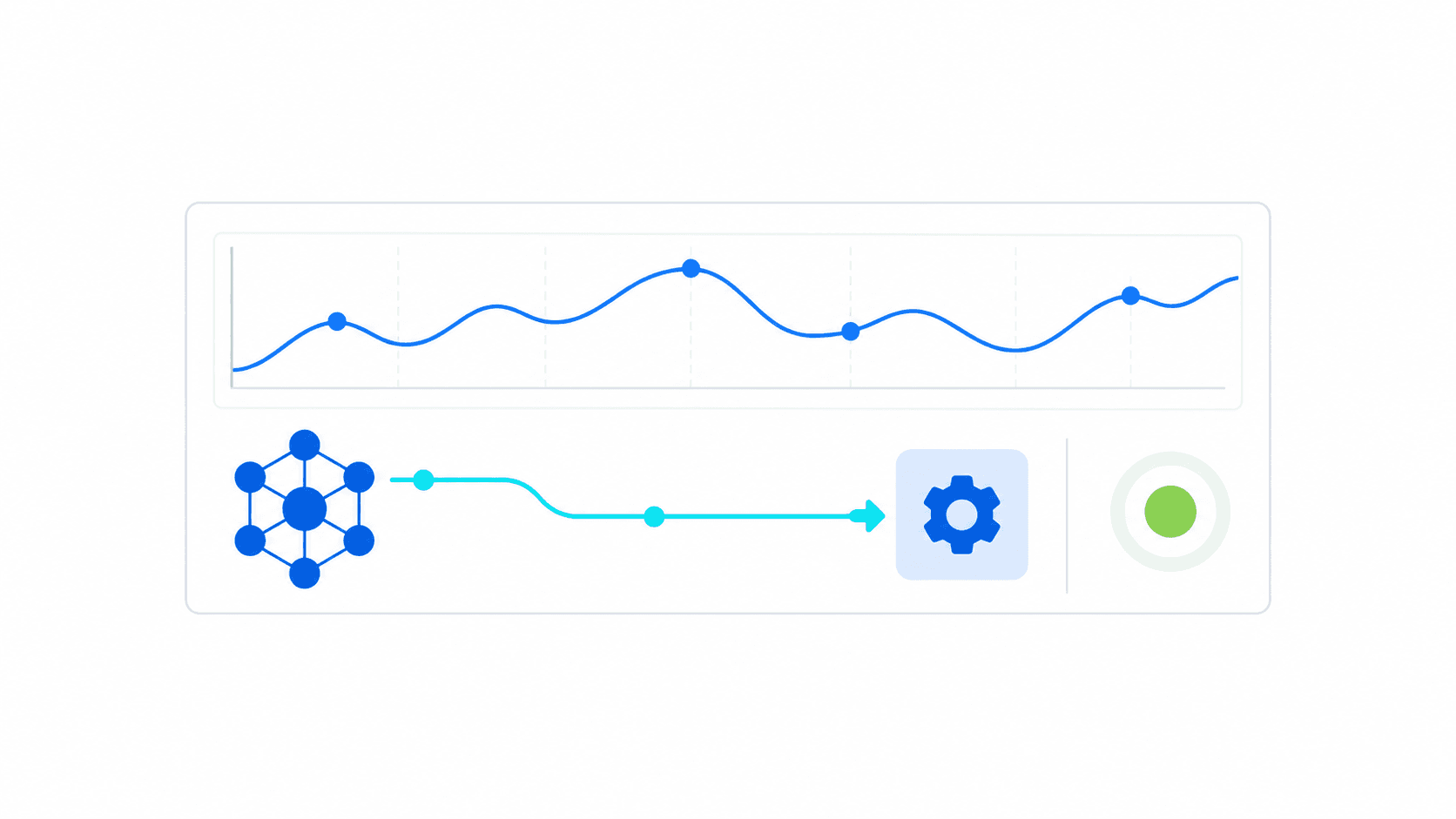
Suppose checkout latency rises after a release. Correlate traces, error rates, deployment events, and infrastructure metrics using shared service identifiers and timestamps. An AIOps assistant can group symptoms and suggest a likely investigation path. It should show the supporting signals and competing explanations so the on-call engineer can assess the hypothesis rather than accept a generated root cause as fact.
Start with read-only incident summaries and approved runbook recommendations. Compare them with incidents resolved through the existing process, including noisy alerts and incidents with multiple causes. Track time to useful diagnosis, incorrect groupings, missed incidents, and engineer correction effort. A shorter summary is valuable only if it preserves the details needed to restore service.
Bound remediation with operational controls
If automation later receives permission to act, define allowed resources, maximum change scope, approval thresholds, and a stop mechanism. A restart or rollback should use an existing deployment or operations API with audited credentials. The model should propose an action; the execution layer should enforce policy, preconditions, and duplicate-action protection.
Test missing telemetry, outdated runbooks, concurrent incidents, and an unavailable model service. Preserve the existing alerting and incident response path when the assistant fails. Compare alert reduction with service-level indicators so fewer notifications cannot conceal missed failures. Record which signals and runbook version informed an action, while filtering credentials and sensitive payloads from operational logs.
Prove that alert correlation preserves critical incidents
Grouping alerts is useful only when the group still leads a responder to the affected service and useful evidence. Reconstruct an incident timeline with the original alerts, deployment markers, and operator actions. Compare the proposed grouping with what actually happened, including an unrelated failure that occurred at the same time. Shared timestamps alone should not be treated as evidence of a shared cause.
Have responders inspect both accepted and suppressed alerts during the pilot. Measure whether critical symptoms remain discoverable, how often two separate incidents are incorrectly combined, and whether the suggested owner is correct. Preserve a route back to raw telemetry. Review a low-traffic service as well as the largest service so a volume-weighted dashboard cannot conceal poor coverage. If correlation quality falls after topology or instrumentation changes, restore the established routing while the new configuration is evaluated.
Explore: Planning an AIOps assessment and implementation roadmap
Measure service outcomes and continuous improvement
Measure alert noise, time to acknowledge and restore, repeat incidents, routing accuracy, operator effort, false correlation, change failure, and service availability. Compare against a baseline and segment by service and incident class. A lower alert count is not a success if critical incidents are missed.
Establish service owners, model and rule change controls, incident review, access governance, and rollback procedures. Monitor data and system changes that can affect detection. Use post-incident findings to improve telemetry, runbooks, correlation, and evaluations—not simply to increase automation.