What an AI detector can and cannot tell you
An AI detector is a classifier that estimates whether a sample of text has patterns associated with machine-generated content. Depending on the product, it may return a label, probability, or highlighted passages. That output is a model estimate about the text it received. It is not a digital signature, a record of how the document was created, or proof that a named person used a particular tool.
This distinction matters because AI content detection, plagiarism checking, and provenance answer different questions. A plagiarism system looks for overlap with known material; an AI detector estimates likely origin; provenance records evidence about creation or modification. A document can be original but AI-assisted, human-written but highly formulaic, or edited by several people and tools. No single score captures that whole history.
Why detector accuracy is difficult to generalize
Detector performance depends on the model and version used to generate a text, the language and genre, sample length, editing, and the detector’s own training data. A tool that performs well on long English essays may behave differently on short customer messages, technical documentation, translated text, or polished copy. Paraphrasing and routine editing can also change a score without changing who did the underlying work.
False positives deserve particular attention. Formulaic writing, limited vocabulary, non-native language patterns, and strict templates may resemble the statistical features a classifier learned from generated text. False negatives are also possible when generated content is revised or comes from a model unlike those in the detector’s evaluation set. Accuracy claims should therefore be read with the test population, threshold, and error trade-offs attached—not treated as universal properties of the product.
Do not turn a detector score into a verdict
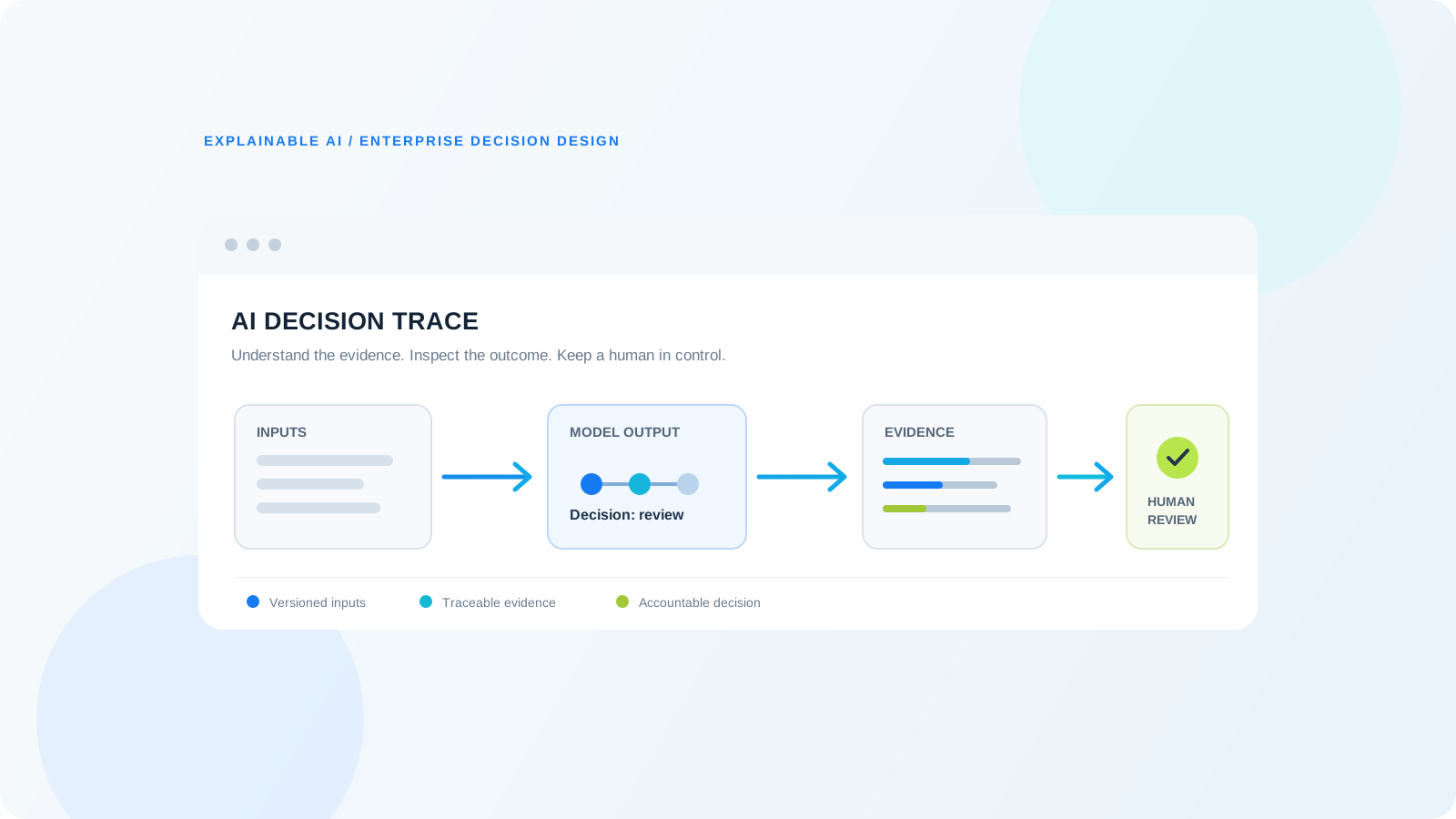
A detector score should not be the sole basis for an employment, disciplinary, vendor, fraud, or customer decision. A false allegation can damage trust and reputation, while a missed case can create a different business risk. Before using detection in a workflow, define what action the score can trigger. A reasonable role may be to prompt a private review or request additional evidence; an automatic accusation or penalty is not a sound default.
Reviewers need context and a fair process. Preserve the original material and its history where permitted, ask the author or supplier for process evidence, and consider drafts, source files, version history, approved AI disclosures, and human review records. Give affected people a way to respond or correct the record. The process should distinguish a policy violation from legitimate AI assistance that the organization permits.
Explore: Human-in-the-loop AI approval design
How to evaluate an AI detector for enterprise use
Start with the intended decision and build a test set that reflects the content your organization actually sees. Include human-written and AI-assisted examples across relevant languages, roles, channels, writing styles, document lengths, and editing levels. Use consented or appropriately governed data. Keep a separate holdout set so a vendor or internal team cannot tune the tool against every example used for evaluation.
Measure more than headline accuracy. Track precision, recall, false-positive rate, calibration, abstention behavior, and reviewer workload at the threshold you plan to use. Break results down by language, content type, and relevant user group. Check how often the tool returns an inconclusive result and whether that is handled safely. Require vendors to explain their evaluation methodology, supported languages, known limitations, data handling, retention, and update practices.
Build a layered content-verification workflow
A mature verification process combines signals rather than asking one detector to settle authorship. Depending on the use case, useful evidence can include signed or versioned source files, editorial workflow records, document history, approved tool logs, cryptographic provenance, supplier attestations, and review by a qualified person. Each signal has limits: metadata can be missing or altered, and a disclosure describes a process but may not independently prove every claim.
Apply the least consequential response first. A low detector score may require no action; an elevated score can trigger a contextual review; only corroborated evidence and a documented policy should support a consequential decision. Keep a record of the detector version, threshold, sample characteristics, reviewer rationale, and final action. Restrict access to submitted content and delete it according to a defined retention schedule.
Monitor detector performance as models and content change
A detector is not a set-and-forget control. Generative models, writing conventions, and editing practices change, which can alter the distribution of text presented for analysis. Monitor false-positive and false-negative findings from reviewed cases, inconclusive rates, appeal outcomes, and changes in content mix. Revalidate after material detector updates or when the organization adds a new language, channel, or use case.
Assign an owner for the policy and a separate technical owner for evaluation and integration. Provide a route to pause the detector if quality drops or a new bias pattern emerges. Communicate its limitations to reviewers and affected users. For high-impact decisions, have legal, privacy, security, and business owners review the proposed workflow before launch.
How FIX Intelligence can help
FIX Intelligence, part of FIX Solutions JSC, can help enterprises assess content-verification needs, compare detector vendors, create representative evaluation sets, and define human-review and escalation policies. Related work can include content provenance, AI usage standards, workflow integration, privacy controls, and monitoring for model and policy changes.
A focused engagement begins with the decision the organization is trying to make—not with a detector purchase. The team can map the current process, test whether detection adds reliable evidence, and recommend a proportionate control design. The objective is a defensible verification workflow that reduces uncertainty without presenting a probabilistic score as proof.
Conclusion: treat detection as one signal
AI detectors can be useful as a screening signal in a carefully bounded process, but they cannot reliably establish authorship on their own. Their results depend on the sample, language, detector version, threshold, and content-generation or editing process. Enterprise leaders should evaluate those limits using their own representative data and make false-positive handling explicit.
The stronger approach combines detector output with provenance, workflow records, human review, and a fair path to challenge a finding. FIX Intelligence can help design and evaluate that system so teams make better-informed decisions while preserving accountability and trust.